
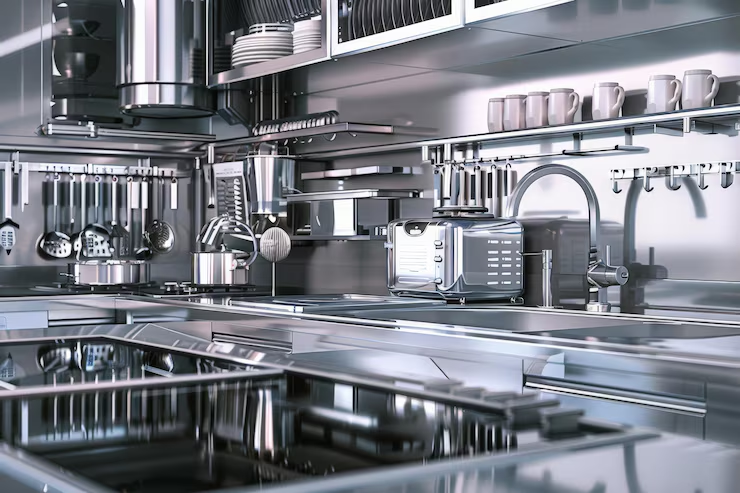
How to Choose Commercial Kitchen Supplies for Your Business
Choosing the right commercial kitchen supplies is one of the most important decisions you will make for a foodservice operation.
Whether you are opening a restaurant, upgrading a school cafeteria, managing a hospital kitchen, or launching a catering business, your equipment and supplies directly affect efficiency, food quality, compliance, and profitability.
This guide breaks down everything you need to know. From defining what commercial kitchen supplies include to understanding performance impact and long-term value, we cover it step by step.
If you are evaluating options, working with a budget, or planning a new build-out, this buyer guide will help you make confident, informed decisions.
What Are Commercial Kitchen Supplies?
Commercial kitchen supplies refer to the equipment, tools, and operational essentials used in professional foodservice environments. Unlike residential kitchen products, commercial-grade supplies are built for:
-
- High-volume production
- Continuous daily use
- Strict safety and sanitation standards
- Heavy-duty durability
They are designed to withstand heat, pressure, rapid cycles, and repeated cleaning without performance breakdown.
Core Categories of Commercial Kitchen Supplies
Commercial kitchens typically require supplies across several major categories:
Cooking Equipment
Ranges, ovens, fryers, griddles, charbroilers, steamers, and combi ovens.
Refrigeration and Cold Storage
Reach-in refrigerators, walk-in coolers, prep tables, undercounter units, blast chillers, and freezers.
Food Preparation Equipment
Mixers, slicers, food processors, prep tables, cutting boards, and knife systems.
Warewashing and Sanitation
Commercial dishwashers, sinks, handwashing stations, sanitizing systems.
Storage and Shelving
Wire shelving, dunnage racks, ingredient bins, and dry storage systems.
Smallwares and Utensils
Pots, pans, sheet trays, ladles, hotel pans, and service tools.
Each category supports a specific operational function. When aligned properly, they create a seamless production flow.
What Makes Good Commercial Kitchen Supplies?
Not all commercial-grade products are created equal. High-performing kitchens depend on equipment that meets operational, regulatory, and financial standards. Here is what separates quality commercial kitchen supplies from average ones.
Durability and Build Quality
Look for stainless steel construction, reinforced welds, and commercial-rated components.
Units should handle constant use without warping, cracking, or losing efficiency. Lightweight materials may cost less upfront, but often lead to premature replacement.
Compliance and Certifications
Professional equipment should meet health and safety certifications such as NSF and UL listings.
Compliance ensures food safety standards are met and reduces risk during inspections.
Performance Efficiency
Equipment must heat evenly, cool consistently, and operate at rated capacity.
Poor temperature stability can compromise food quality and create waste.
Energy Efficiency
Modern commercial kitchen supplies often include energy-saving technologies.
ENERGY STAR-rated appliances may reduce utility costs significantly over time.
Serviceability and Support
Accessible components, available replacement parts, and reliable technical support matter.
Downtime in a commercial kitchen directly impacts revenue. Partnering with an experienced supplier such as FKG Equipment can streamline procurement, service access, and long-term planning.
How to Choose Commercial Kitchen Supplies: Step-by-Step
Selecting commercial kitchen supplies requires planning, not guesswork. Follow this structured process:
Step 1: Define Your Menu and Volume
-
- Identify your core menu items
- Estimate peak service volume
- Determine the cooking methods required
- Evaluate prep intensity
Your menu dictates your equipment. A bakery requires different tools than a steakhouse or hospital cafeteria.
Step 2: Assess Your Space and Layout
-
- Measure available square footage
- Identify ventilation requirements
- Review electrical and gas capacity
- Plan workflow zones
Kitchen design directly impacts productivity. Equipment must fit without restricting movement.
Step 3: Establish a Realistic Budget
-
- Separate must-have items from upgrades
- Include installation and utility costs
- Factor in maintenance and warranty coverage
Short-term savings should not compromise long-term durability.
Step 4: Evaluate Equipment Specifications
-
- Compare capacity ratings
- Review energy consumption
- Confirm certifications
- Check warranty details
Avoid choosing based solely on price.
Step 5: Work With a Knowledgeable Supplier
An experienced supplier understands operational needs, compliance standards, and design efficiency. Companies like FKG Equipment provide consultative guidance, helping operators select commercial kitchen supplies aligned with performance goals rather than impulse purchases.
Planning for Growth and Scalability
Many operators underestimate future expansion. When selecting commercial kitchen supplies, consider:
-
- Will volume increase within 2–3 years?
- Is additional refrigeration capacity needed?
- Can the cooking line support menu expansion?
Scalable equipment reduces the need for costly replacements later. Investing strategically upfront prevents operational limitations as your business grows.
How Commercial Kitchen Supplies Impact Daily Operations
Commercial kitchen supplies are not just tools. They shape workflow speed, food consistency, labor efficiency, and long-term profitability. When equipment aligns with operational needs, kitchens run smoothly. When it does not, friction manifests as delays, waste, and stress. Let’s examine how these supplies influence performance more deeply.
Workflow Optimization and Kitchen Zoning
A professional kitchen should operate in clearly defined zones:
-
- Receiving and storage
- Preparation
- Cooking
- Plating and service
- Warewashing
Each zone requires specific commercial kitchen supplies configured for flow. For example, refrigeration should sit near prep stations to reduce movement. Cooking equipment should align in a linear or ergonomic configuration to prevent congestion during peak hours. Improper equipment placement forces staff to cross paths, increasing labor time and accident risk. Strategic layout planning improves output without adding staff.
Performance Impact: Cooking Equipment
Cooking equipment is often the largest investment in commercial kitchen supplies. Performance matters in several key areas:
Heat Recovery Time
In high-volume kitchens, fryers and griddles must quickly recover their temperature between batches.
Slow recovery leads to inconsistent food texture and longer ticket times.
Even Heat Distribution
Uneven ovens create product inconsistency. Overcooked edges and undercooked centers reduce food quality and increase waste.
Capacity vs. Demand
Undersized equipment forces overtime cooking cycles. Oversized equipment wastes energy and space.
Matching equipment output to projected demand is critical.
Refrigeration: The Backbone of Food Safety
Refrigeration is one of the most performance-sensitive categories of commercial kitchen supplies. Poor temperature control can:
-
- Increase spoilage
- Create food safety violations
- Raise energy bills
Advanced refrigeration systems maintain stable temperatures even during frequent door openings. Blast chillers, for example, improve food safety by rapidly cooling prepared items to safe storage temperatures. This reduces bacterial growth and extends shelf life. Energy-efficient refrigeration also lowers operational expenses over time.
Warewashing and Sanitation: Hidden Efficiency Drivers
Dishwashers and sanitation systems rarely receive the attention given to cooking equipment. However, warewashing efficiency determines how quickly a kitchen can reset for continued service. High-capacity dish machines reduce turnaround time for plates and cookware. Integrated handwashing stations improve compliance and reduce the risk of contamination. Modern commercial kitchen supplies increasingly include touchless systems, temperature monitoring, and water-saving technologies. These features reduce health risks while lowering utility costs.
Strategic Equipment Planning for Different Business Types
Not all foodservice operations require the same commercial kitchen supplies. Understanding your operational model is essential.
Restaurants
Restaurants typically require:
-
- Versatile cooking lines
- Adequate cold storage
- Prep tables with integrated refrigeration
- Durable smallwares
Flexibility is important because menus often evolve.
Institutional Kitchens
Schools, hospitals, and correctional facilities require:
-
- High-capacity steamers
- Large-scale refrigeration
- Bulk food prep equipment
- Durable shelving systems
Efficiency and consistency outweigh customization.
Catering and Mobile Operations
Mobility and compact efficiency become priorities. Equipment must:
-
- Fit within a limited space
- Be energy-efficient
- Support transport stability
Selecting compact, multi-function units reduces footprint without sacrificing performance.
Cost Implications: Short-Term vs. Long-Term Investment
Commercial kitchen supplies should be evaluated using the total cost of ownership, not just the purchase price. Initial cost includes:
-
- Equipment price
- Installation
- Utility setup
- Ventilation adjustments
Ongoing cost includes:
-
- Energy consumption
- Maintenance
- Repairs
- Replacement parts
Energy-efficient equipment often carries a higher upfront cost but lowers lifetime expenses. For example, an ENERGY STAR refrigerator may reduce energy consumption by up to 15–20% compared to standard models. Over years of continuous operation, this difference becomes significant.
Partnering with experienced providers such as FKG Equipment helps operators balance upfront investment with lifecycle performance.
Maintenance Planning and Operational Longevity
Even the best commercial kitchen supplies fail prematurely without maintenance planning. Preventive maintenance reduces unexpected downtime.
A structured maintenance approach should include:
-
- Routine cleaning schedules
- Temperature calibration checks
- Ventilation system inspections
- Seal and gasket replacements
- Annual professional servicing
Downtime during peak hours can cost more than the repair itself. Planning maintenance as part of your purchasing strategy protects revenue.
Technology Integration in Modern Commercial Kitchen Supplies
Technology is increasingly integrated into commercial kitchen environments. Examples include:
-
- Digital temperature monitoring
- Smart refrigeration alerts
- Programmable combi ovens
- Energy usage tracking
These technologies provide data-driven insight into performance. Smart systems help operators identify inefficiencies early, reducing food waste and energy loss. Data visibility also improves compliance documentation during inspections.
Performance Metrics to Evaluate
When assessing commercial kitchen supplies, consider measurable metrics:
-
- Output per hour
- Energy usage per cycle
- Recovery time
- Temperature variance
- Cleaning cycle duration
These metrics help compare equipment objectively. Instead of relying on brand recognition alone, evaluate operational performance against real kitchen demands.
Final Thoughts: Making the Right Investment
Commercial kitchen supplies are foundational to operational success.
They influence workflow, compliance, cost control, food quality, and long-term scalability.
Strategic planning, performance evaluation, and lifecycle cost analysis are essential before making purchasing decisions.
At FKG Equipment, we work with operators to carefully evaluate needs, align equipment with operational goals, and support long-term performance. Check out our services and what we can do for you.
If you are planning a new kitchen, upgrading existing equipment, or evaluating expansion, we are here to help.
Contact us to explore your options. Evaluate your current setup with our team, and build a kitchen designed for performance, compliance, and growth!
The Experts in Chain Restaurant Growth
FKG Equipment is not your typical restaurant equipment dealer. We focus all of our knowledge, resources, and expertise on one thing… GROWING CHAIN RESTAURANT SUCCESS!