
Industrial Kitchen Equipment: What Professionals Use
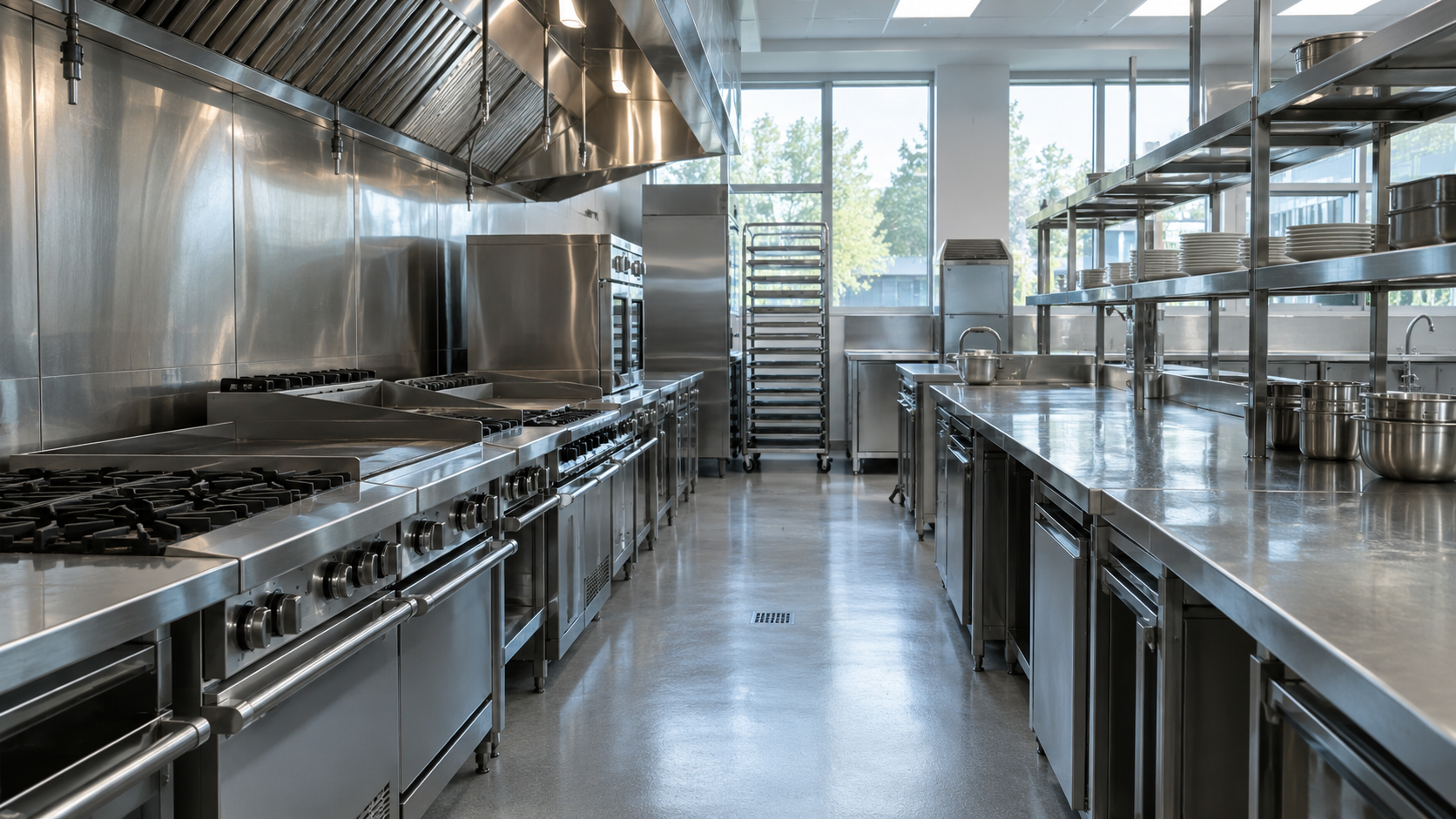
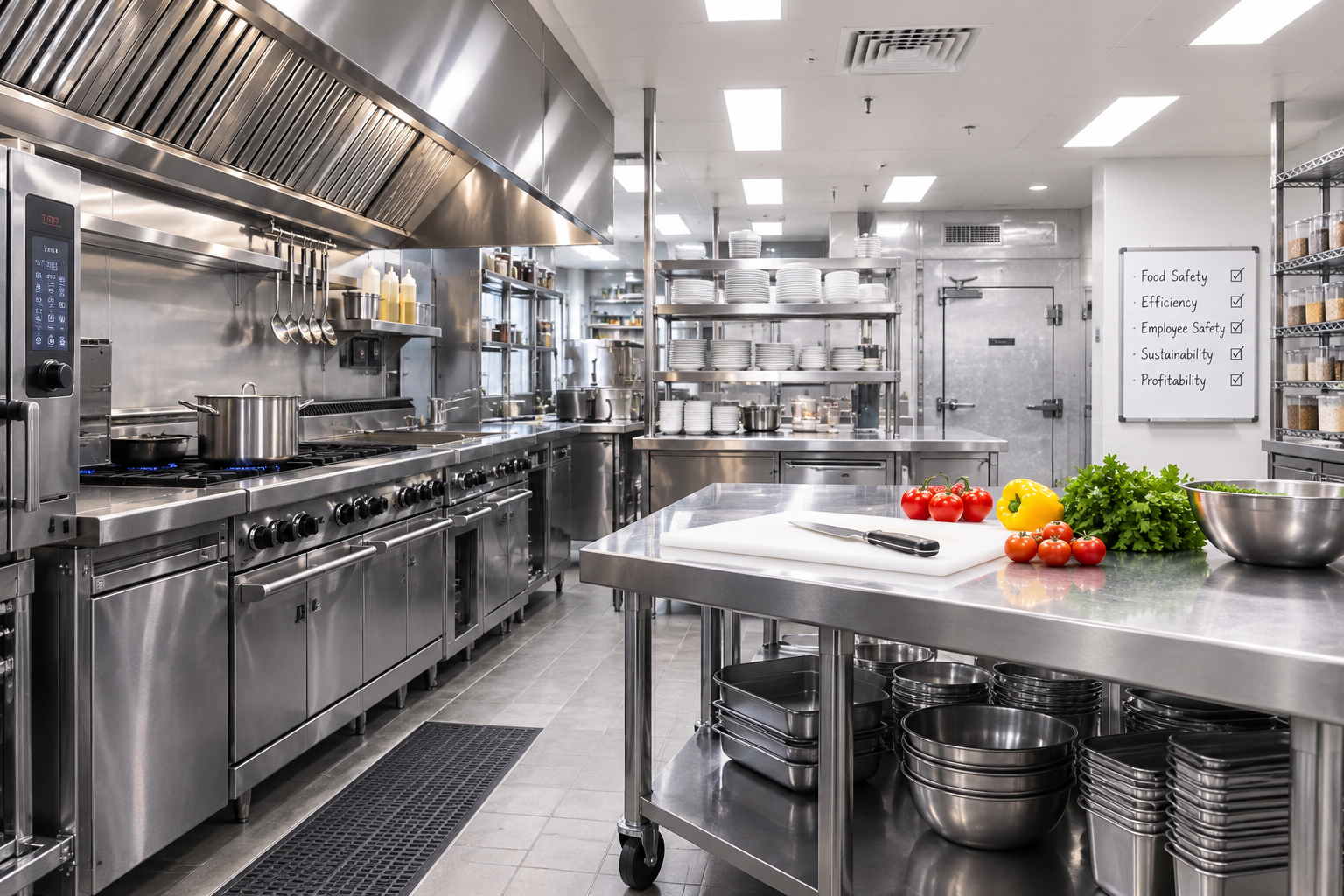
Industrial kitchen equipment is built for performance under pressure.
In high-volume environments like restaurants, hospitals, schools, and correctional facilities, equipment must operate continuously, maintain consistency, and meet strict regulatory standards.
Unlike standard commercial kitchen setups, industrial kitchens are designed for scale. Every piece of equipment affects workflow speed, food safety, labor efficiency, and long-term operating costs.
This guide explains what professionals actually use, why it matters, and how to evaluate industrial kitchen equipment strategically.
If you are planning a new facility, upgrading an existing kitchen, or optimizing output, this article will help you make informed, performance-driven decisions.
What Is Industrial Kitchen Equipment?
Industrial kitchen equipment refers to heavy-duty foodservice systems designed for high-output, continuous operation in large-scale environments.
These systems are engineered to:
-
- Handle large batch production
- Operate for extended hours
- Maintain precise temperature control
- Meet strict safety and sanitation codes
- Withstand aggressive cleaning routines
Industrial equipment goes beyond basic commercial-grade standards. It is optimized for volume, durability, and operational consistency.
Industrial vs. Commercial Kitchen Equipment: What’s the Difference?
Although the terms are sometimes used interchangeably, there are important distinctions.
Industrial Kitchen Equipment
Designed for:
-
- Institutional facilities
- Large production kitchens
- Central commissaries
- Correctional and healthcare environments
- High-volume catering operations
Typically includes larger capacity systems, reinforced construction, and specialized workflow design.
Standard Commercial Kitchen Equipment
Designed for:
-
- Independent restaurants
- Small foodservice operations
- Boutique hospitality concepts
While still durable, commercial-grade units may not be engineered for institutional-level production demands.
The difference often comes down to capacity, redundancy, durability, and infrastructure requirements.
Core Categories of Industrial Kitchen Equipment Professionals Use
Industrial kitchens require a carefully structured equipment ecosystem. Each category supports a critical operational function.
Heavy-Duty Cooking Systems
Professionals rely on:
-
- High-capacity ranges
- Industrial convection and combi ovens
- Large-volume steamers
- Tilting kettles
- Braising pans
- Industrial fryers
- Charbroilers and griddles
These systems are built for sustained output and rapid recovery times.
Heat consistency is critical when preparing hundreds or thousands of meals daily.
High-Capacity Refrigeration Systems
Temperature control at scale requires:
-
- Walk-in coolers and freezers
- Roll-in refrigeration units
- Blast chillers
- Refrigerated prep stations
- Cold storage shelving systems
Industrial refrigeration must maintain stable temperatures even during frequent access and heavy loading cycles.
Energy efficiency also becomes significantly more important at this scale.
Bulk Food Preparation Equipment
High-volume operations depend on:
-
- Industrial mixers
- Food processors
- Vegetable prep machines
- Meat grinders
- Portion control systems
Batch consistency directly affects food cost control and quality standards.
Warewashing and Sanitation Systems
In institutional environments, sanitation throughput is essential.
Professionals use:
-
- Conveyor dishwashers
- Flight-type dish machines
- Large compartment sinks
- Automatic chemical dispensers
- Hand hygiene stations
Sanitation systems must handle continuous flow without slowing production.
What Makes Good Industrial Kitchen Equipment?
Performance expectations in industrial settings are significantly higher.
Here is what professionals prioritize.
Structural Durability
Equipment should be constructed from heavy-gauge stainless steel.
Reinforced hinges, sealed welds, and industrial-grade components are essential.
Industrial kitchens cannot afford structural failures.
Output Capacity and Recovery Speed
High production environments demand rapid temperature recovery.
Slow heating or cooling creates bottlenecks and inconsistent product quality.
Capacity should align precisely with projected meal volume.
Regulatory Compliance
Industrial equipment must meet:
-
- NSF sanitation standards
- UL electrical safety listings
- Local health codes
- Fire and ventilation regulations
Compliance is non-negotiable.
Serviceability and Lifecycle Support
Replacement parts availability and technical support matter more at scale.
Downtime in an institutional kitchen can disrupt hundreds or thousands of meals.
Working with experienced providers such as FKG Equipment ensures access to expert guidance, equipment sourcing, and long-term planning support.
How Professionals Choose Industrial Kitchen Equipment
Selecting industrial kitchen equipment is a strategic process. Professionals do not start with products, they start with operational analysis.
Large-scale kitchens must align equipment with volume, staffing, compliance, and infrastructure constraints.
Here is how experienced operators approach it.
Step 1: Define Production Volume and Service Model
Before selecting any equipment, professionals determine:
-
- Average daily meal count
- Peak production windows
- Batch cooking vs. cook-to-order
- Delivery vs. on-site service
Volume dictates capacity. The service model dictates workflow.
For example, a central commissary producing 5,000 meals per day requires entirely different equipment from a hospital kitchen serving staggered meal schedules.
Step 2: Engineer Workflow Before Buying Equipment
Industrial kitchens operate on movement efficiency.
Professionals map:
-
- Receiving → Storage → Prep → Cooking → Holding → Service → Warewashing
Equipment is selected to support this linear flow.
Poor layout increases:
-
- Labor fatigue
- Cross-contamination risk
- Ticket times
- Accident potential
Industrial kitchen equipment must fit the workflow, not disrupt it.
Step 3: Validate Utility Infrastructure
Large equipment draws significant resources.
Professionals confirm:
-
- Gas load capacity
- Electrical amperage
- Water pressure
- Drainage requirements
- Ventilation compatibility
Installing high-BTU equipment without adequate infrastructure can trigger expensive retrofits.
This is why experienced suppliers like us at FKG Equipment often assess facility constraints before finalizing equipment selection.
Step 4: Evaluate Performance Specifications
Beyond size and price, professionals assess:
-
- Temperature recovery time
- Energy consumption rates
- Output per hour
- Load capacity
- Cleaning cycle duration
Specifications should match operational goals, not marketing claims.
Performance data matters more than brand perception.
Step 5: Analyze Total Cost of Ownership
Industrial kitchen equipment must be evaluated across its lifecycle.
Professionals calculate:
-
- Initial acquisition cost
- Installation expense
- Utility impact
- Maintenance frequency
- Expected lifespan
An energy-efficient combi oven may cost more upfront but reduce labor and utility expenses long term.
High-volume kitchens benefit most from efficient systems because small savings multiply daily.
Work With Industrial Kitchen Equipment Specialists
Choosing industrial kitchen equipment is not just about purchasing machines. It is about building an operational system that supports volume, compliance, and long-term efficiency.
If you are planning a new facility, expanding production capacity, or replacing aging systems, the right guidance can prevent costly mistakes.
At FKG Equipment, we work with restaurants, institutions, healthcare facilities, and large-scale foodservice operations to align equipment with real-world performance needs.
Whether you need a full kitchen build-out or targeted equipment upgrades, our team helps you:
-
- Evaluate production capacity requirements
- Review infrastructure compatibility
- Optimize workflow layout
- Compare performance specifications
- Select equipment built for durability and compliance
Start with a practical evaluation of your current setup. Request a consultation for your upcoming project and explore industrial-grade equipment options with our expert support!
Let us help you design a kitchen built for scale, efficiency, and long-term performance. Check out our services and what we can do for you.
Frequently Asked Questions
Is industrial kitchen equipment more energy efficient?
Many modern industrial systems include energy-saving features and ENERGY STAR certifications. Because these kitchens operate at scale, efficiency improvements can significantly reduce long-term utility costs.
What certifications should industrial kitchen equipment have?
Equipment should meet NSF sanitation standards and UL safety listings at minimum. Local fire, ventilation, and health code compliance must also be verified before installation.
How long does industrial kitchen equipment typically last?
With proper maintenance, high-quality industrial kitchen equipment can last 10–20 years or more. Lifecycle depends on usage intensity, maintenance schedules, and build quality.
When should equipment be upgraded instead of repaired?
Upgrades are typically recommended when repair costs approach replacement value, energy inefficiency increases operating expenses, or production demands exceed equipment capacity.
Conclusion
Industrial kitchen equipment forms the backbone of high-volume foodservice operations.
From cooking systems and refrigeration to warewashing and infrastructure integration, each component influences productivity, safety, and financial performance.
Professionals approach equipment selection strategically. They evaluate workflow, capacity, compliance, infrastructure compatibility, and long-term operating costs before making decisions.
When planned correctly, industrial kitchen equipment supports scalable growth, operational stability, and consistent food quality.
If you are evaluating your current systems, planning a new facility, or preparing for expansion, expert guidance can help you avoid costly missteps and ensure long-term performance.
At FKG Equipment, we support operators with practical, performance-focused solutions tailored to real-world demands.
Contact us today to discuss your project. Request a consultation and review your equipment needs with our team!