Smart Commercial Kitchen Design: A Layout Playbook
Most commercial kitchens look great on paper. The renderings are clean, the equipment list checks out, the inspector signs off. And then Friday night happens.
That is when you find out what the design really looks like. Cooks bumping into each other in aisles that felt wide enough on the blueprint. Plates sitting at the pass because nobody can get to them. The dish pit backing up because there is nowhere for the runner to drop a tray. None of that shows up in the drawings, but it all shows up on the P&L by Monday morning.
Commercial kitchen design is not really about square footage or stainless steel. It is about how food, people, and equipment actually move when the tickets are flying and nobody has time to think.
When the layout works, prep flows into cooking, cooking flows into plating, and the dish pit closes the loop without anyone crossing paths. When it does not, every shift turns into a traffic jam, and the people who feel it first are the ones on the line.
What Makes Commercial Kitchen Design Different From a Standard Layout?
A residential kitchen serves one or two cooks turning out a handful of meals. An commercial kitchen serves dozens of staff producing hundreds or thousands of covers a day, often back to back, often without breaks. The whole environment has to be built around that reality.
That single difference changes everything downstream. Aisles need to be wide enough for two cooks to pass each other while carrying hot pans. Floors have to be slip resistant under grease and water, which is why quarry tile and seamless epoxy are standard.
Walls move toward washable finishes. Drains run anywhere water is likely to land. Ventilation stops being an afterthought and becomes one of the most expensive line items in the build.
The result looks less like a kitchen and more like a small factory. That is by design.
How Does Layout Actually Influence Kitchen Efficiency?
Every wasted step in a commercial kitchen multiplies. A line cook who walks an extra eight feet between the cooler and the range on every plate is logging miles over a single shift. Now multiply that by every cook on every line across every shift in a week. Suddenly you are paying labor for footwork instead of cooking.
Smart layouts shorten the most repeated paths. Pre pan storage sits within arm’s reach of the prep cook.
Walk-ins open close to receiving but stay within range of the line. Hot, cold, and pastry stations are placed so finished components meet at the pass without anybody having to dodge anybody.
Workflow design also keeps people safer. The U.S. Bureau of Labor Statistics tracked 93,800 nonfatal injuries and illnesses in full-service restaurants in a single year, with cuts and lacerations occurring at more than three times the rate of private industry overall.
A lot of those incidents trace back to crowded aisles, awkward reaches, and stations placed too close to hot equipment. Cleaner workflow means faster service, fewer injuries, and lower turnover among the people who keep the kitchen running.
Which Layout Styles Work Best for Different Operations?
There is no single correct kitchen plan. The right one depends on the menu, the volume, and the building. Five layouts dominate professional foodservice, and each one solves a specific problem.
The assembly line layout is built for repetitive output. Pizza shops, sandwich operations, and quick service concepts thrive on it because stations sit in a straight line and food simply moves down the row. There is almost no room for the cook to wander, which is the point.
The island layout places cooking equipment in a central block with prep, storage, and washing along the perimeter. It works beautifully for hotels and banquet kitchens where multiple chefs work the line at the same time and need to see each other across the cookline.
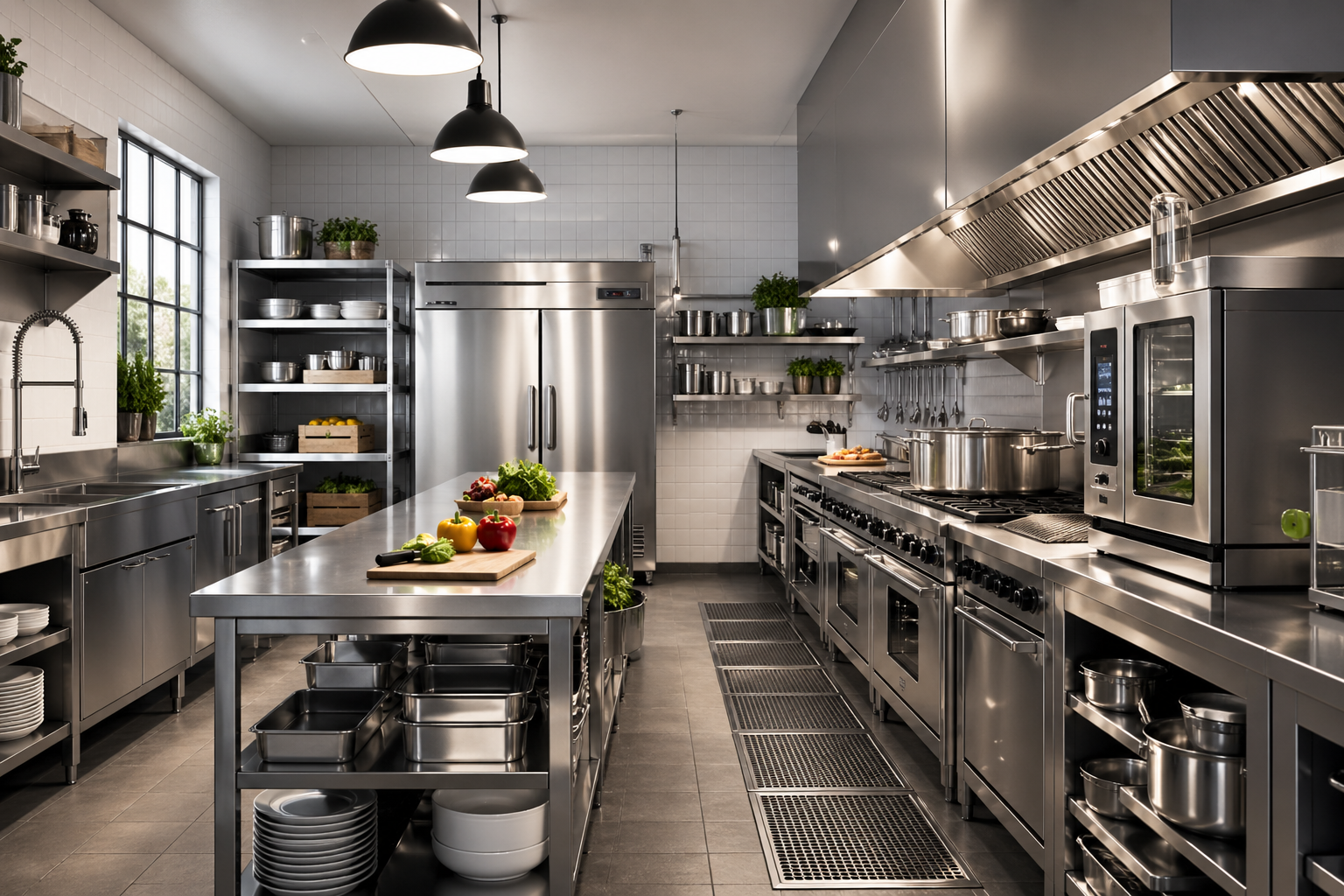
The zone style layout divides the room into clear functional areas: receiving, storage, prep, cooking, plating, and washing. It is the most flexible setup and the most common in fine dining, where menus shift and the kitchen has to adapt.
The galley layout runs equipment along two parallel walls. Food trucks, ghost kitchens, and small cafes lean on it because every inch counts. Done right, a galley feels efficient. Done wrong, it feels like a hallway with knives.
The open kitchen layout puts the cookline on display for guests. It is part design choice, part marketing move. It also demands extra attention to ventilation, noise control, and how staff carry themselves, because the dining room is now watching.
What Zones Should Every Commercial Kitchen Include?
The layout style might change, but the underlying zones stay the same. A complete kitchen plan accounts for receiving, where deliveries arrive and get inspected before anything else happens. It includes dry, refrigerated, and frozen storage, sized to support the menu without forcing daily emergency runs to the supplier.
Food prep should ideally be split between protein and produce to support food safety. The cooking zone is anchored under the ventilation hood and supported by landing space on both sides.
Service and plating sit at the pass where expediters can see every ticket. Warewashing is separated from prep and cooking to prevent cross contamination, and staff support areas include handwashing stations, lockers, and a small office for managers.
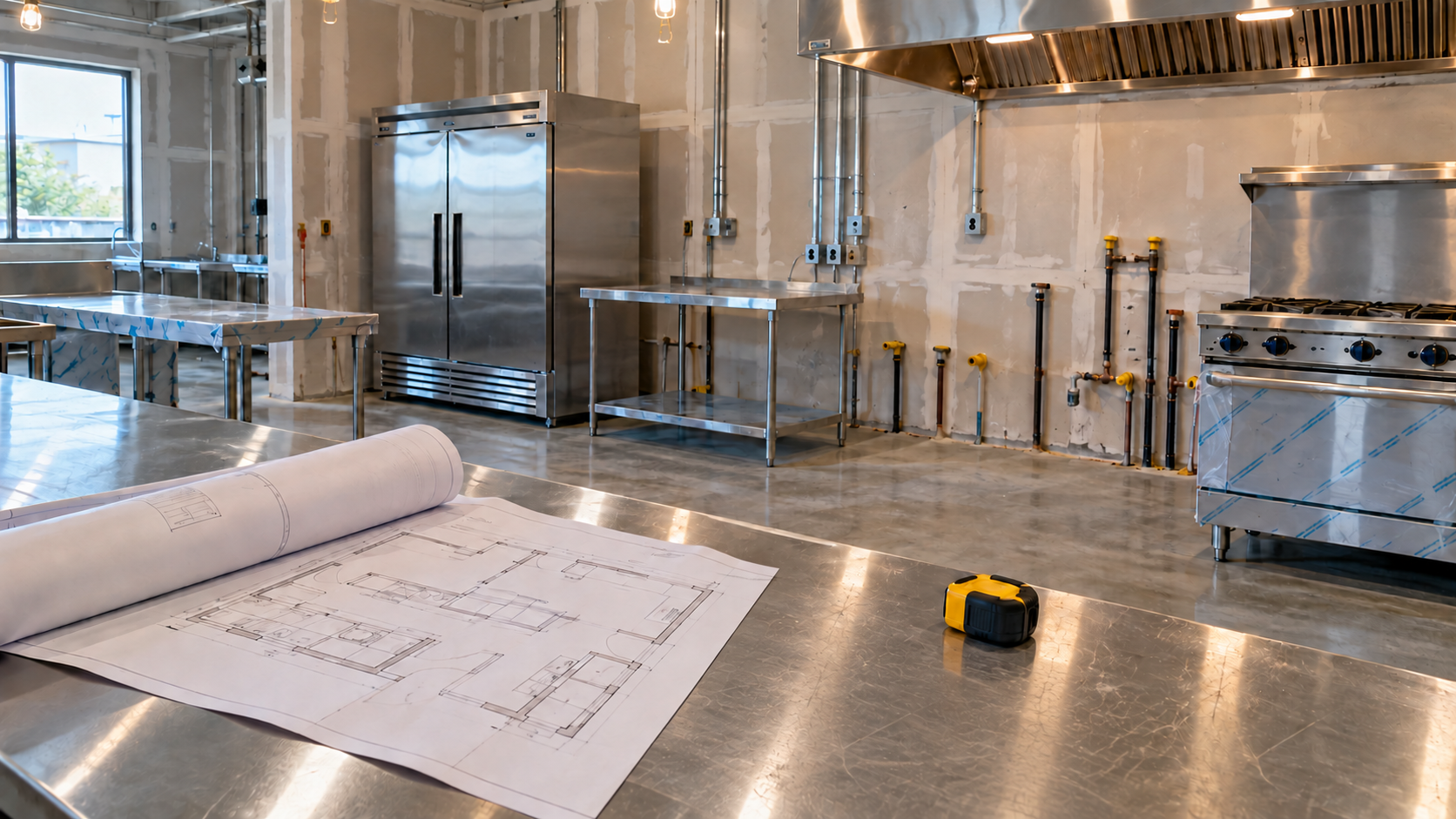
From smallwares to refrigeration, sourcing every component through a single turn-key supplier prevents zoning conflicts during buildout, because one team is tracking how the pieces fit together instead of three vendors blaming each other when the dimensions do not line up.
When any of these zones are missing or undersized, the rest of the kitchen has to absorb the load. That is where bottlenecks form, and bottlenecks always show up at the worst possible moment.
How Does Equipment Selection Shape Commercial Kitchen Design?
Equipment is not chosen after the layout. It is chosen with the layout. A combi oven and a six burner range take up similar floor area but require very different utilities, ventilation profiles, and clearance. A blast chiller next to a fryer is asking for trouble. A rack oven next to the back door creates a heat tunnel every time deliveries arrive.
Energy use is also a major factor. According to ENERGY STAR, restaurants are among the highest energy consumers of any building type, using roughly two to three times more energy per square foot than the average commercial building. High volume quick service kitchens can climb to ten times.
Outfitting a kitchen with a full suite of ENERGY STAR certified equipment can save more than $5,100 a year and cut greenhouse gas emissions by tens of thousands of pounds. Those numbers shift how designers think about equipment placement, refrigeration grouping, and hood sizing.
Cluster the cold stuff away from the heat. Match the hood to the actual cookline, not the original concept menu. Choose certified units when the math supports it.
Choose the wrong piece of equipment, or place the right piece in the wrong spot, and you lock in years of inefficiency. That is why operators benefit from working with a partner who understands both the equipment specs and the design implications before purchase orders go out.
What Design Mistakes Quietly Kill Productivity?
A handful of patterns show up in nearly every troubled kitchen.
-
- Tight aisles are the first culprit. Anything narrower than forty eight inches in a working aisle creates collisions during peak service. Cooks stop trusting each other to pass, the line slows, and tickets pile up at the pass.
- Misplaced handwash sinks come next. Health codes require them in specific zones, and missing one can fail an inspection even when everything else is correct. Operators rarely notice until the inspector does.
- Underbuilt ventilation is a slower killer. The hood that was sized for the original menu rarely keeps up after the chef adds a charbroiler, a wood oven, or a smoker. Heat and grease loads creep upward, and one day the kitchen suddenly feels twenty degrees hotter for no obvious reason.
- Storage placed too far from prep adds invisible labor cost. Every extra trip to the walk in slows the line by a few seconds, and those seconds compound into lost covers.
- Missing landing space next to ovens and fryers forces cooks to balance hot pans on stovetops. It is unsafe, it is inefficient, and it is the kind of thing nobody flags during the design review because the cookline looks fine on the drawings.
- Poor lighting over prep stations turns sharp knife work into a hazard. It is also one of the cheapest things to fix in design and one of the most disruptive to fix after opening.
Each one of these issues is straightforward to fix in the design phase. Each one is expensive to fix once the kitchen is built.
Frequently Asked Questions
1. How much should an operator budget for a complete commercial kitchen build out?
Costs vary widely by region and concept, but a full commercial kitchen typically runs between $250 and $450 per square foot, including equipment, mechanical systems, and finishes. High volume or specialty kitchens can push past that range. The biggest swings usually come from ventilation and refrigeration, not the cooking equipment itself.
2. How long does it take to design a commercial kitchen from scratch?
The design phase usually takes four to eight weeks for a single unit restaurant, and longer for hotels, hospitals, or central production kitchens. Schematic design, equipment selection, and engineering drawings each add their own timeline, and revisions are normal.
3. Do I need a certified foodservice consultant or can my architect handle the design?
Architects manage the building, but a certified foodservice consultant focuses specifically on workflow, equipment, and code compliance inside the kitchen. For anything larger than a small cafe, having both on the team produces a better outcome and usually saves money in the long run.
4. Can a kitchen be redesigned without shutting down operations completely?
Phased renovations are possible and common, especially for hotels and institutional kitchens. The plan usually involves building a temporary line, working in sections, and scheduling the noisiest work overnight or during slow periods. It takes more coordination, but it keeps revenue flowing.
5. How often should an existing kitchen layout be reevaluated?
Most operators benefit from a layout review every five to seven years, or any time the menu, volume, or staffing changes significantly. Small adjustments made early prevent the need for major rebuilds later, and a fresh set of eyes often spots the workarounds that staff stopped noticing years ago.
How Can the Right Partner Simplify the Design Process?
Strong commercial kitchen design starts long before the first piece of stainless steel is delivered. It starts with menu analysis, throughput goals, and a clear picture of how the team actually cooks on a Friday night with a full board.
At FKG Equipment, our design team works alongside operators, architects, and consultants to align equipment selection with the realities of the floor plan. We help match throughput to capacity, flag utility conflicts before they show up on site, and source the units that fit both the layout and the budget.
We also handle turn-key installation so the path from drawing to opening day stays in one set of hands. The result is a kitchen that runs the way it was drawn, instead of one that fights its own design every shift.
Talk to our team to start mapping out your next kitchen project, or browse our blog for more on equipment, layout, and what works in real kitchens.