Equipment Timeline for a 90-Day Restaurant Build-Out
A 90-day restaurant build-out leaves very little room for unresolved equipment decisions. By the time construction is moving, the equipment package is already connected to electrical rough-ins, plumbing, gas, ventilation, millwork, delivery access, installation and inspections. A change to one item can therefore affect several different trades and, in the worst case, the opening date itself.
For growing chains, the answer is not simply to “order equipment earlier.” The more important discipline is understanding which decisions sit on the critical path and when those decisions need to become final.
The following timeline is designed as an equipment and coordination framework for a 90-day build-out once the site, concept and broader construction plan are established. Actual construction and permitting schedules will vary by project and jurisdiction, but the framework gives restaurant development teams a practical way to organize the equipment side of an opening.
Days 90–76: Freeze the Equipment Requirements
The first phase is about turning the equipment package from a working plan into a coordinated specification.
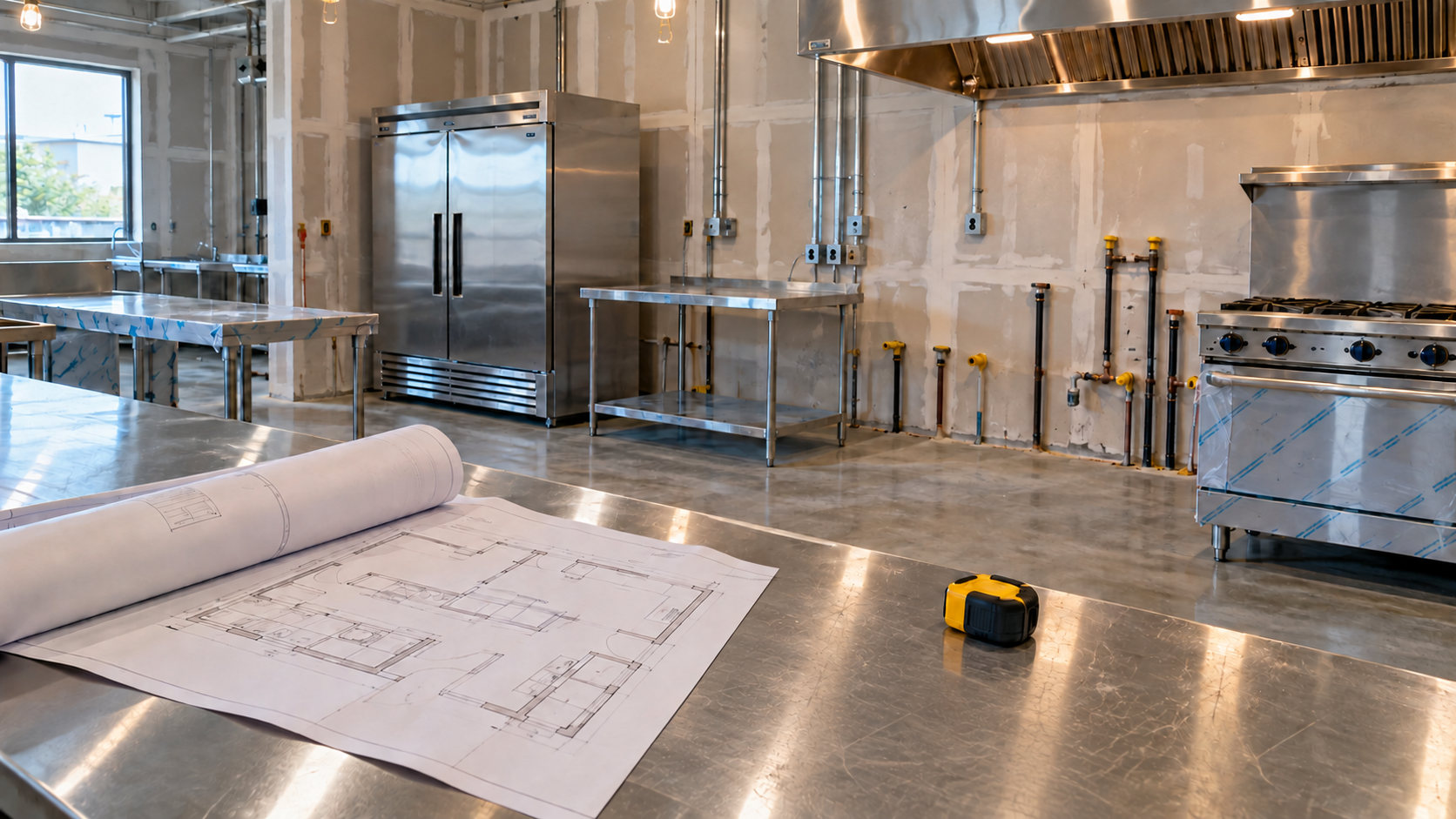
By this point, the menu, expected volume and operating model should be established well enough to confirm the major equipment package. The team should finalize model numbers, capacities, utility requirements, accessories and approved alternates. The equipment schedule should then be compared against the architectural and MEP drawings.
This coordination is where small discrepancies are easiest to fix.
If an equipment schedule calls for a specific electrical configuration but the engineer’s drawings show another, the issue is inconvenient at Day 85. It can be expensive at Day 20 after electrical work has already been completed.
The same is true for gas loads, plumbing connections, drains, ventilation and clearance requirements.
For multi-unit concepts, this stage should also verify that the equipment package still matches the corporate prototype. Any deviation should be intentional and documented rather than becoming an accidental new standard.
Days 75–61: Identify and Release the Critical-Path Items
Not every piece of restaurant equipment presents the same schedule risk.
A countertop appliance that is commonly stocked is very different from a custom-fabricated stainless assembly, walk-in refrigeration package or site-specific hood system. Restaurant development teams should therefore identify which items could affect construction sequencing or create a significant opening delay if they arrive late.
FKG’s franchise-opening guidance similarly emphasizes the importance of settling equipment responsibilities early and coordinating equipment against the brand specification rather than waiting until the end of the build-out.
Depending on the concept, critical items may include walk-ins, ventilation, fire-suppression components, custom stainless, specialty refrigeration, millwork or equipment requiring an unusual electrical or fuel configuration.
This is also where approved alternates become valuable. A growing brand should not have to restart its equipment-selection process because one manufacturer suddenly cannot meet the required schedule.
Days 60–46: Complete the Field Coordination Audit
By the middle of the schedule, the equipment plan needs to meet the physical building.
This is the time to verify that utility locations line up with the final equipment specifications, service panels can be accessed, doors and drawers have room to open, and the largest pieces of equipment can physically travel from the delivery truck to their installed locations.
Delivery-path planning deserves more attention than it usually receives. A piece of equipment can be perfectly specified and arrive exactly on schedule, only to discover that a finished doorway is too narrow or a hallway turn is too tight.
Measure the route before delivery day.
The team should also verify floor drains, curbs, wall backing, equipment anchoring and ventilation connections while those conditions can still be corrected without major rework.
For a chain buyer overseeing several openings at once, this phase is also a good opportunity to use a standardized site-readiness report instead of relying on informal updates from each GC.
Days 45–31: Build the Store Package
Once specifications are confirmed, the focus should shift from individual products to the complete location.
For a one-off restaurant, managing equipment piece by piece may be workable. At chain scale, it becomes far more efficient to track each new store as a complete package.
That package may include cooking equipment, refrigeration, prep equipment, shelving, smallwares, front-of-house products, furniture, accessories and any other items needed for the opening.
FKG’s Store-In-A-Box model is built around this principle. FKG combines commercial kitchen equipment with categories such as furniture, smallwares, graphics, lighting and décor, so the entire opening package comes from one source and arrives on one truck.
For chain operators, the practical takeaway is bigger than any one supplier: track the store, not just the products.
The development team should be able to look at a location and understand whether its entire package is complete, not simply whether individual purchase orders have been submitted.
Days 30–16: Confirm That the Site Is Actually Ready for Delivery
Delivery should be based on site readiness, not optimism.
Restaurant equipment arriving too early can end up sitting in an active construction environment where it is exposed to dust, damage, theft or repeated movement. Equipment arriving too late can compress installation, startup, inspection and training into an unrealistic window.
Before releasing the shipment, the GC, project manager and equipment team should confirm that the receiving path is open, floors are ready for equipment movement, utilities have reached the appropriate stage, overhead work is complete in the installation area, equipment locations are identifiable and secure storage exists for anything that cannot immediately be set in place.
The installation team should also be scheduled before the truck is rolling toward the job site.
This sounds obvious, but at scale these are exactly the details that create problems when responsibility is spread among multiple parties.
Days 15–8: Install, Start Up and Document Every Issue
Equipment arriving on site does not mean the equipment portion of the project is complete.
After installation, each major unit should be checked for correct placement, connection, leveling, startup and basic operation. The team should document visible freight damage, missing accessories, incorrect equipment and performance issues before opening.
All unresolved items should go onto one punch list with a clear owner and due date.
This is another area where a single point of coordination can make a significant difference for multi-unit brands. FKG’s current project-management model includes delivery coordination, install scheduling, replacement tracking, warranty support and direct communication with franchisees and GCs, reducing the amount of coordination that has to flow back through the corporate office.
FKG also maintains warehouse capacity for equipment and essential parts and offers installation support through its network of local certified installers, which is particularly relevant to brands opening locations across multiple markets.
Days 7–1: Test the Kitchen as an Operating System
The final week should not be spent discovering that something critical is missing. It should be used to prepare the team and pressure-test the operation.
Warranty documents, model and serial numbers, manuals, cleaning requirements, preventive maintenance procedures, filters, consumables and service contacts should all be organized. Managers should know who to call when equipment has an issue, rather than figuring that out during the first busy weekend.
Then the restaurant should run the kitchen under conditions that resemble actual service.
Do not simply turn everything on and confirm that it operates. Run orders through the system. Watch employee movement. Pay attention to refrigeration recovery, cook times, holding capacity, warewashing and the handoff between stations.
A kitchen may be technically complete while still exposing an operational problem that should be corrected before opening day.
Frequently Asked Questions
Can a restaurant really complete the equipment process within a 90-day build-out?
It can be possible when the brand standard, equipment package and project responsibilities are already established. Custom fabrication, permitting, construction changes and product availability can all affect the schedule, so the timeline should always be adapted to the project.
Which restaurant equipment should be ordered first?
Items that are custom, site-specific, difficult to substitute or required by other trades should be treated as critical-path items. Standard stocked equipment may provide greater scheduling flexibility.
When should restaurant equipment be delivered?
Delivery should be scheduled around verified site readiness and installation capacity, rather than simply counting backward from opening day.
Who should be responsible for coordinating restaurant equipment installation?
For multi-unit operators, having a defined equipment project manager or single point of contact can reduce confusion among the supplier, GC, installer, franchisee and corporate team.
A Better Opening Process Should Get Easier With Every Store
The biggest advantage a growing restaurant brand has is repetition. The company should not have to relearn the same lessons during every build-out.
Each completed store should make the next equipment schedule more accurate, the next site-readiness review more thorough and the next opening more predictable.
FKG’s business is specifically structured around that type of growth. The company positions itself as an equipment and project partner for growing concepts, with commercial kitchen equipment, warehousing, design, Store-In-A-Box capabilities, installation, project coordination and service under one relationship.
A 90-day timeline will always move quickly. The goal is to make sure fast does not mean improvised.